Introduction
In today’s competitive business world, speed, personalization, and data-driven decisions define success. Yet, traditional CRM systems — though effective — can’t keep up with the rapidly growing volume of customer data. That’s where AI-powered CRM systems step in.
Artificial Intelligence (AI) has transformed how companies handle customer relationships, automate workflows, and analyze sales patterns. Whether you’re a small business or a large enterprise, AI CRM systems can give you a competitive edge by predicting customer behavior, improving lead scoring, and personalizing every touchpoint.
According to Gartner’s 2025 research, over 65% of B2B companies have adopted AI-driven CRM tools to automate sales forecasting, customer segmentation, and marketing workflows — a number that continues to grow as businesses realize AI’s immense potential.
What Is an AI-Powered CRM System?
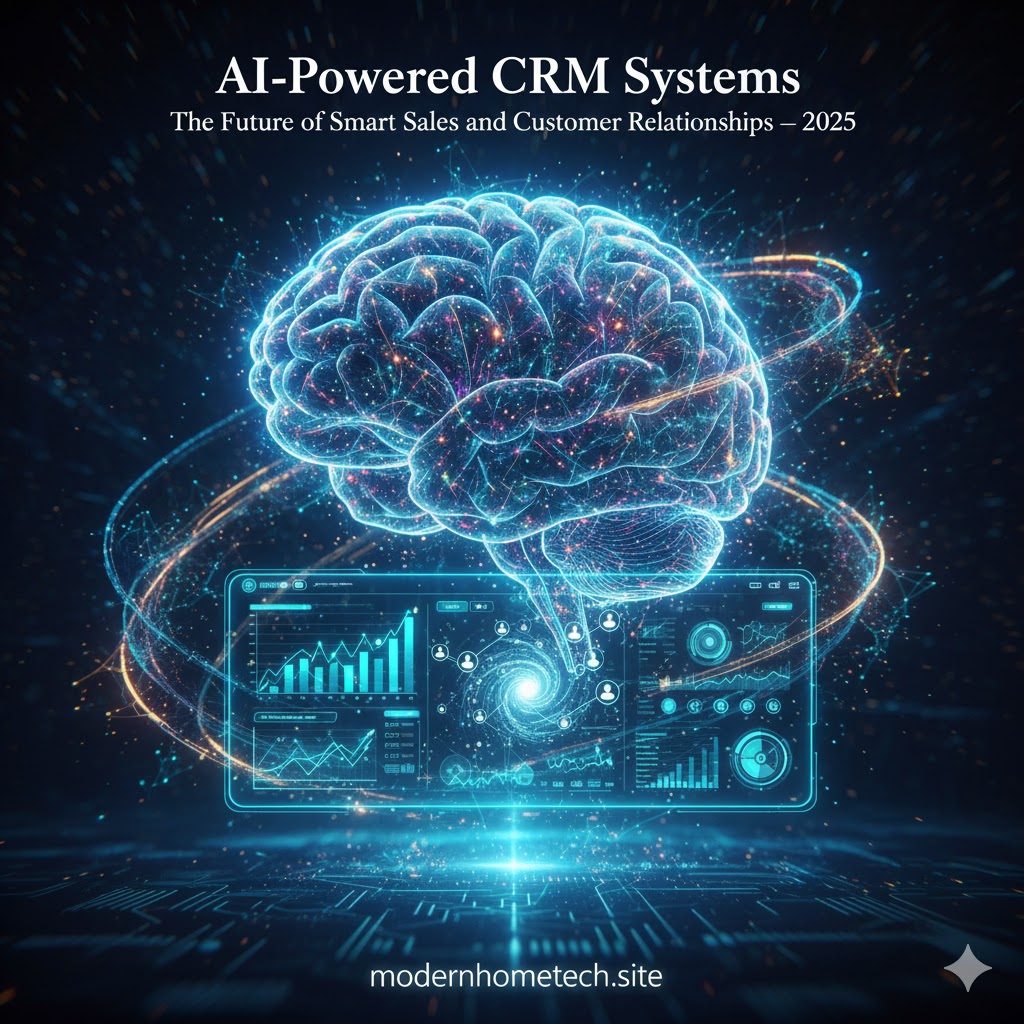
An AI-powered CRM (Customer Relationship Management) system integrates machine learning, natural language processing (NLP), and predictive analytics into the CRM software.
Unlike traditional CRMs that simply store customer information, AI CRMs analyze data in real-time, uncover insights, and make intelligent recommendations — like which leads are most likely to convert or when to follow up.
Some popular AI-driven CRMs include:
-
Salesforce Einstein
-
HubSpot AI CRM
-
Zoho Zia
-
Pipedrive Smart CRM
-
Freshsales with Freddy AI
These platforms go beyond contact management — they actually think, learn, and evolve with your business.

Key Benefits of AI-Powered CRM Systems
1. Smarter Lead Scoring and Conversion Prediction
AI uses historical sales data to identify patterns in successful deals. It automatically scores leads based on engagement, demographics, and previous behaviors — allowing your sales team to focus only on the most promising prospects.
No more wasting time on cold leads. AI predicts who’s most likely to buy — and when.
2. Hyper-Personalized Customer Experiences
Modern customers expect personalization. With AI CRM, you can analyze browsing behavior, purchase history, and communication tone to deliver tailored recommendations, emails, and offers.
For example, HubSpot’s AI CRM can send automated follow-ups with the right message at the perfect time, increasing conversion rates by up to 30%.
3. Predictive Sales Forecasting
AI-powered CRMs analyze vast amounts of data to predict future sales trends. Instead of relying on manual estimates, AI gives accurate, data-driven forecasts that help businesses plan inventory, marketing budgets, and revenue strategies with confidence.
4. Workflow Automation & Productivity Boost
AI automates repetitive tasks like:
-
Logging calls and emails
-
Updating contact records
-
Sending reminders
-
Scheduling meetings
This helps sales reps spend more time selling and less time doing admin work.
A report by McKinsey shows that AI automation can improve productivity by up to 40% in sales departments that fully integrate AI CRMs.
5. Sentiment Analysis and Smarter Communication
AI can analyze the tone and sentiment in emails, chats, and calls — identifying when a customer is satisfied, confused, or at risk of churning.
This real-time insight allows your support or sales team to respond with empathy and precision, building stronger relationships and higher retention rates.
6. Intelligent Chatbots and Virtual Assistants
Many AI CRMs now come with built-in chatbots that can qualify leads, answer FAQs, and even schedule calls — 24/7. These bots can hold human-like conversations and sync every interaction back into the CRM database.
This not only enhances customer experience but also reduces workload on your human support teams.
7. Real-Time Data Insights and Analytics
AI CRMs constantly process and learn from your business data. They generate insights on:
-
Which campaigns work best
-
When to contact leads
-
What product customers prefer
-
Why deals fail
With this intelligence, you can make smarter business decisions faster.
AI-Powered CRM in Action: Real-World Use Cases
-
E-Commerce: Personalized product suggestions based on browsing patterns.
-
Real Estate: Predicting which leads are most likely to buy or rent properties.
-
Healthcare: Tracking patient engagement and automating appointment reminders.
-
Finance: Fraud detection and smarter loan application tracking.
-
B2B Sales: Intelligent deal prioritization and lead nurturing automation.
Across industries, AI CRMs save time, reduce manual work, and increase revenue potential.
Top AI-Powered CRM Systems in 2025
| CRM System | Key AI Features | Best For |
|---|---|---|
| Salesforce Einstein | Predictive analytics, opportunity scoring, NLP insights | Large enterprises |
| HubSpot AI CRM | Smart email suggestions, chatbots, workflow automation | SMEs & startups |
| Zoho CRM (Zia) | Sales predictions, anomaly detection, AI insights | Growing teams |
| Freshsales (Freddy AI) | Deal insights, intent detection, automation | Customer-centric businesses |
| Pipedrive Smart CRM | Lead scoring, pipeline automation, AI deal tracking | Sales teams |
Why AI-Powered CRM Is the Future
By 2030, Gartner predicts that AI-driven CRMs will handle 70% of customer interactions without human intervention. Businesses that adapt early will have a massive competitive advantage — faster responses, better data use, and smarter decision-making.
AI doesn’t replace human connection — it enhances it. It takes care of the repetitive tasks so your team can focus on what truly matters: building real relationships and closing meaningful deals.
Conclusion
AI-powered CRM systems are no longer a luxury — they’re a necessity for any growth-driven organization. From predictive analytics to personalized engagement and intelligent automation, AI transforms how businesses attract, convert, and retain customers.
If your business still runs on manual data entry and guesswork, now is the time to switch. Embrace AI-powered CRM and watch your customer relationships — and revenue — evolve to the next level.